


Last week I finally saw Obsession, the feature-length directorial debut by 26 year old Curry Barker.
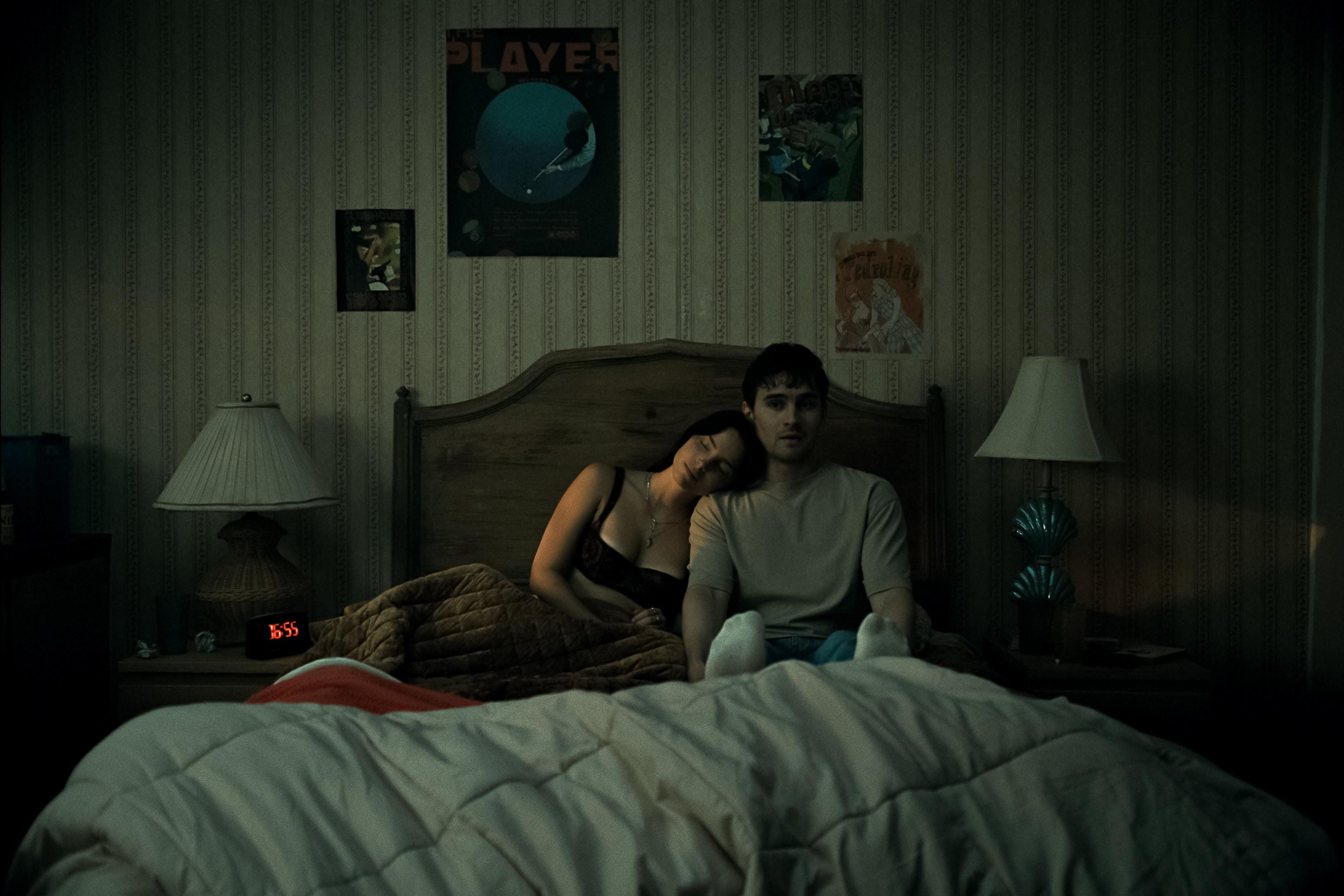
For the first time in a long time, every single person I went to watch it with left the cinema unanimously agreeing it was one of the best films, and best horrors, we’d seen in ages. A true masterclass of quality and creativity in lieu of big budget and big names. It’s also one of the few horrors that’s genuinely filled me with terror and left me feeling rattled afterwards.
I haven’t been able to stop thinking about it since, because what’s so deeply unsettling about this horror has only really just occurred to me. Intentional or not, Obsession is not your run-of-the-mill ‘love spell gone bad’ or stalker thriller - it’s a film that uses the darkest analogy for a very real threat that’s becoming the new trope du jour; the wish for women to have less agency.
[Warning: spoilers lay ahead, plus references to sexual violence, assault and descriptions of graphic scenes]
The setup
The film follows protagonist Bear (Michael Johnson) who has a hapless crush on his best friend Nikki (brilliantly played by true star in the making, Inde Navarrette). Rather than risk rejection by confessing his feelings to her on a ride home, he purchases a ‘gift’ in the form of the One Wish Willow and wishes that she would love him more than anything in the whole world. As the tagline goes: Be careful who you wish for.
The movie itself is a genuine feat. The base concept is nothing really new; a misguided wish that goes wrong, a love spell that backfires. It might even seem old hat. Yet it’s how it’s executed that takes the genre to new, disturbing depths.
The nuance in characterisation is near-perfect. There are fun, subtle red herrings, callbacks, easter eggs, and misdirections throughout. The foreshadowing is subtle and the unbearable dread is slowly built in every scene. You never know what Nikki is going to do next while under the thrall of magic and that genuine unpredictability is what keeps you on edge.
Perhaps best of all, it never truly reveals or over-explains its own rules or lore, unlike the more ‘spoon fed' narratives that are so current, which is possibly why it manages to retain its own mystery and (excuse the pun) magic. By the time things take a violent and brutal turn, you genuinely feel there’s no way out of this that won’t be wretchedly bloody and depraved.
It takes the best bits of Fatal Attraction, Fede Alvarez' Evil Dead, and Possession and mixes it with flavours of Hereditary, Pearl and Weapons.
The only option Bear is given is to die, so the wish ends and Nikki can be free.
Girls just wanna have fun
Horror is often a cultural barometer for current fears and anxieties. Any horror fan worth their salt knew that post-Covid, the absurdity of current affairs would slowly start to shape the genre and a sub-genre would emerge.
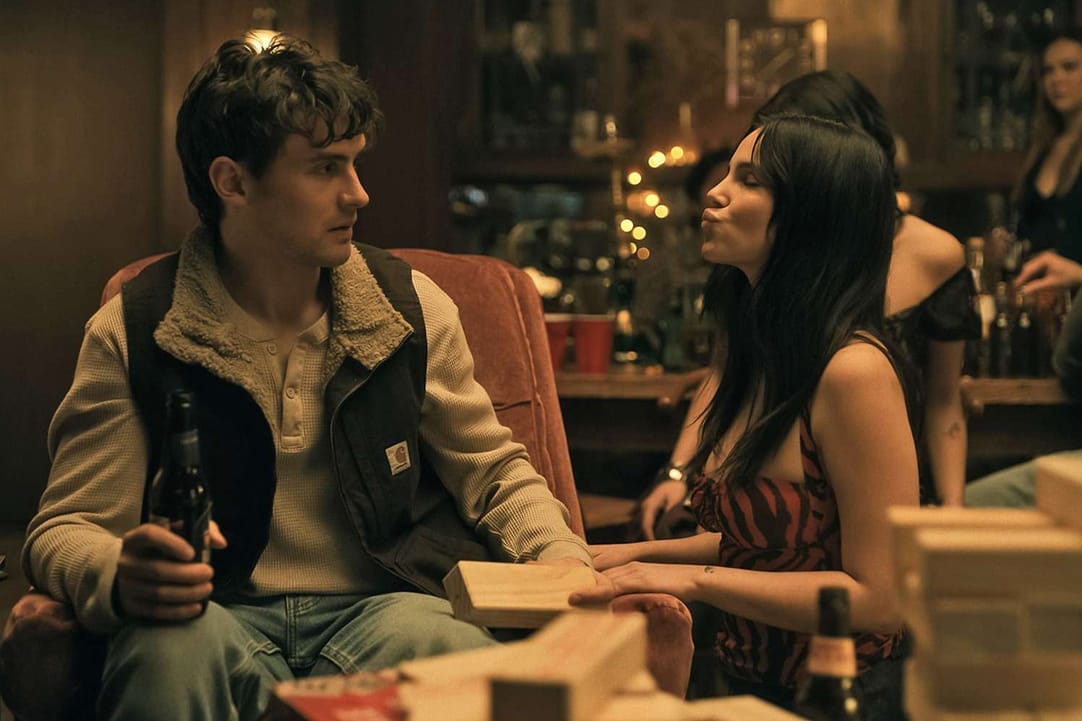
Perhaps this is why it fascinates me that the genre, and particularly the prominence of women in it are finally having a cultural moment of sincerity and proper appreciation. This is also likely why Nikki feels the real protagonist of this unrelentingly mean-spirited tale. Bear is a guy whose primary concern is whether he may or may not be friend-zoned. Rather than put himself in a vulnerable position to make a real connection with a woman, he takes a supernatural shortcut which removes all of her agency. Is that not where fiction and real-life begin to converge?
Once you notice it, it’s an unsubtle metaphor for the attitudes of the manosphere - the online movement dubbed as such for its toxic attitude to masculinity and anti-feminist rhetoric. From the entitlement seen in online dating and the ‘Nice Guy’ archetypes, you have a film which cleverly captures current anxieties and turns the ‘crazy girlfriend’ concept on its head.
It’s also broader than that. We’re at a place where we no longer have the patience to build real relationships or work hard to maintain them; many prefer simulations of relationships that can be discarded when they become tiresome or inconvenient. Bear’s preoccupation with instant gratification and absolute certainty is what seals his fate.
Interestingly a lot of recent films have played with this idea of control. The manosphere and rise of ‘red pill thinking is largely grounded in fears about power and who really has it.
Companion was one of my favourite films of last year, following a [spoiler] sexbot who turns on her manipulating ‘boyfriend’ and breaks free from his thrall. Weapons, one of the best horrors of last year. plays with similar themes of getting others to do your dark bidding, while Get Out and Nosferatu similarly kept their leads under the thumb of otherworldly master manipulators. Don’t Worry Darling, Pearl, MaXXXine, Ready or Not, and Midsommar, all toy with female characters who mentally or physically break free from an institution that removes their agency and freedom, with their emancipation often being the ironic recoil for their oppressors.
Sound familiar?
Sitting to the left
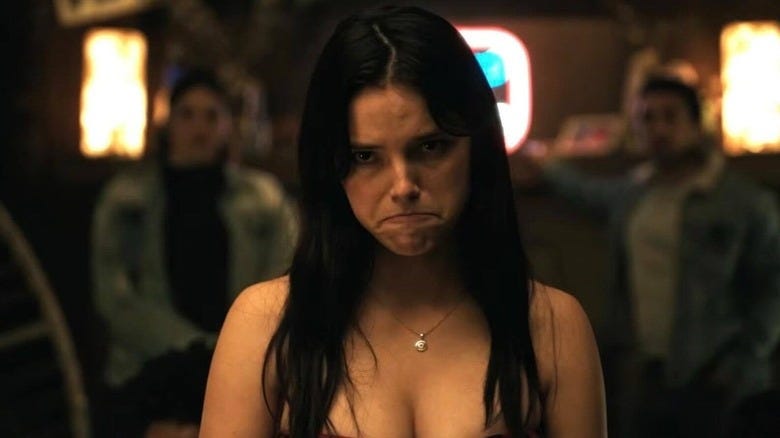
The tension in Obession creeps slowly because initially, no one is really sure if the spell has worked. It’s confirmed by Curry and the cast that Nikki did in fact reciprocate romantic feelings for Bear but this is denied genuine growth or exploration because of Bear’s wish. The ‘real’ Nikki seems to disappear into an unknown sunken place; it’s never stated whether she is possessed or controlled by an entity,, if her soul is elsewhere or if she’s simply being pushed out of her own body Being John Malkovich style by a new, different or darker part of herself.
Instead, Bear enjoys the benefits of a relationship completely devoid of depth or authentic emotion. Sure, they look happy in their little montage but the sinister side-effects of Nikki’s growing obsession means that Bear has to deal with the reality of a woman who only exists for him, who thinks of nothing else, and engages in toxic and violent behaviours against the things which compete for his attention and affection. The disconnect between his fantasy and reality is pushed to extremes.
The parallel between what Bear conjures and how women are talked about in certain corners of the online world is obvious. A woman with agency is an unappealing threat, where outcomes can’t be predicted or controlled… while a submissive, malleable target is more ideal. Yet the cries of ‘but no, not like that!’ ring out as Bear realises that having a one-dimensional, single-minded partner isn’t so great after all.
Seeing Nikki act jealous, possessive, and emotionally manipulative towards him, with such a vague underlying threat of violence is a deliberate exercise in irony.
As Nikki exhibits increasingly disturbing behaviours such as gifting him dead things (much like a cat), writing some Substack-worthy ominous prose about incestuous love, and watching him sleep, it really take a lot for Bear to reckon with himself about what he’s done. Even when friends express concern he is taking advantage of her mental state, which is initially attributed to drugs or a breakdown, he responds in denial.
Yes, there’s something wrong with her, but he won’t admit that it’s his own doing.
Rather than ask for the wish to be reversed during a horrifying phone call with the One Wish Willow’s manufacturer, he merely asks for it to be changed despite evidence that the real Nikki is suffering somewhere. It’s hinted that when Nikki soils herself by standing in the same spot for hours, waiting for Bear to come home, that this is an act she’s done before which Bear has overlooked, because being with her is more important to him than her wellbeing.
One particularly potent scene is right after Bear finds out Nikki lied to him about her dad having cancer.
“Does it matter?'“ she asks, before we cut to them having sex.
She moans with pleasure, but her face is emotionless. It’s been widely described as a rape scene because effectively that’s what it is - the real Nikki isn’t consenting. On one level it’s darkly comic; because this douchebag guy doesn’t care this hot girl is a dangerous, unhinged liar, but it’s tragic, because at this point he knows the real Nikki would never do such a thing, which makes his abuse of her body all the more upsetting.
Putting the ‘manic’ in Manic Pixie Dream Girl
Right up until the final act, where their friend Sarah who harbours a crush on Bear, is bludgeoned to death by Nikki in one of the most drawn-out, shocking scenes; and the moments where Bear contemplates suicide, Bear puts his own self-interest first.
His love for Nikki is pure infatuation - completely superficial, even on a friendship level. In a moment of clarity, the ‘real’ Nikki; who we learn has been fighting against the new, defective version all along, watching like a passenger as her body is taken over, begs Bear to kill her.
He declines, instead questioning if being with him is ‘really so bad’. True love requires sacrifice and instead Bear selfishly fails to do the right thing at every turn. Of course, the performance means it’s impossible not to feel sorry for him in such a desperate situation but an asshole is an asshole. Bear is a perfect villain.
Obsession is Bear’s shortcut to intimacy that doesn’t actually exist, and as we reach the crescendo it becomes all too apparent that Bear has guiltily kept her in place, begrudgingly dealing with the side-effects until they are impossible to ignore.
The execution is not overly ham-fisted, but the message is there. Nikki has no agency, no control, no freedom while the wish is in play which is precisely how some men in some corners of the internet want women to be.
Obsession is the kind of horror that comes along once in a generation and darkly captures current moods with aplomb. I think Curry likely has a long career ahead of him but most of all, that post-Covid horror has finally found its new fixation.
Ellen Forster and I will be back with Episode 7 of Emotionally Invested Podcast this month, but in the meantime you can check out episode 6 where we chat age gap relationships!
We’re also interested in hearing about your celebrity crushes….
Who was your all-time obsessive crush, and just how obsessed were you?
Did you ever get to meet them and what lengths did you go to?
Who is your biggest ‘hear me out’ ?

Finally watched it so got to read this :')
Toootally agree with everything you've said. It's not often a film has me doing further reading but you've reminded me of some interesting theories I found which I know you'll find fascinatinggg.
The cat thing - somebody said that Freaky Nikki is modeling herself on Bear's cat, because he loved it, and she's trying to find ways to make him love her too. Eg bringing him dead things (as you said) and also apparently there's kibble in her poop when she's waiting for him to come home(??)
Sarah - it's clear that she really likes Bear from the off, and her feelings grow throughout the film. So, Nikki is forced to up the ante in order to *still* be the one who loves him most in the world. Not only is Sarah a straightforward rival for Bear's love, the fact that she exists puts Nikki under a considerably larger amount of strain because according to the wish, she has to love him more than Sarah does.
The poem - written by Real Nikki, and is considered to be one of her breakthrough moments. It's about Hansel and Gretel because she actually sees him as a brother figure. "I knew he would not leave this place. He would relent and choose to be inside me, like he had many nights before," is so much more unsettling coming from Real Nikki.
Also saw a really good Substack about how the whole thing is an allegory for AI agreeing with everything you say and trying to replace your real life relationships, sometimes with deadly consequences, and you've touched on that too.
As you said, it's not often a film gets under my skin to this degree. V good/v bad stuff.
Hello, I like your analysis of the movie. I completely understand you perspective of the connection between Bear’s actions and the recent online objectification of women to be mere “pleasure objects” by disgruntled men. But I believe that there is also a deeper message at play here and not what the authors intended. I personally view the story as a critique of the modern perspective on gender roles and gendered interaction, where men and women interact on a frequent and highly integrated fashion. The fact is the movie sets up Bear and Nikki’s monstrous “relationship” is one that is plagued by insecurity, potentially one-sided love and unclear boundaries between sexes. What I’m trying to say is that if people like Bear or any other person of the cast were upfront and clear about their feelings, things would not have progressed the way they did. But inevitably and realistically, no one is willing to out themselves and confess their love, which is human. Which is why interactions between the sexes should be treated as fundamentally different from same sex interactions (barring homosexual relationships which is another story and a minority case). Also, when they weaponized normality by playing “vibe” orchestrations and 2020s-esque soft pop tunes, I took it as a critique of modern society where people casually interact with the opposite gender but do not consider long term consequences from giving into infatuation.
A side note is Ian as well, who really seems like a metaphor for the shallow relationships we have today, which are based on jokes and laughs but break down under real problems and stress(him instinctively treating Bear’s problem as a joke + wishing for money as the examples here)
Bottom line, I took the movie as a critique of the fast and loose ways we view relationships of people we are attracted to, as well as the superficiality of relationships based around drama and dopamine chasing, I know this is probably not a mainstream view so I would like to know what you think and if you agree/disagree. I also wrote this pretty impromptu so forgive the stuff that seems worded wierdly.